
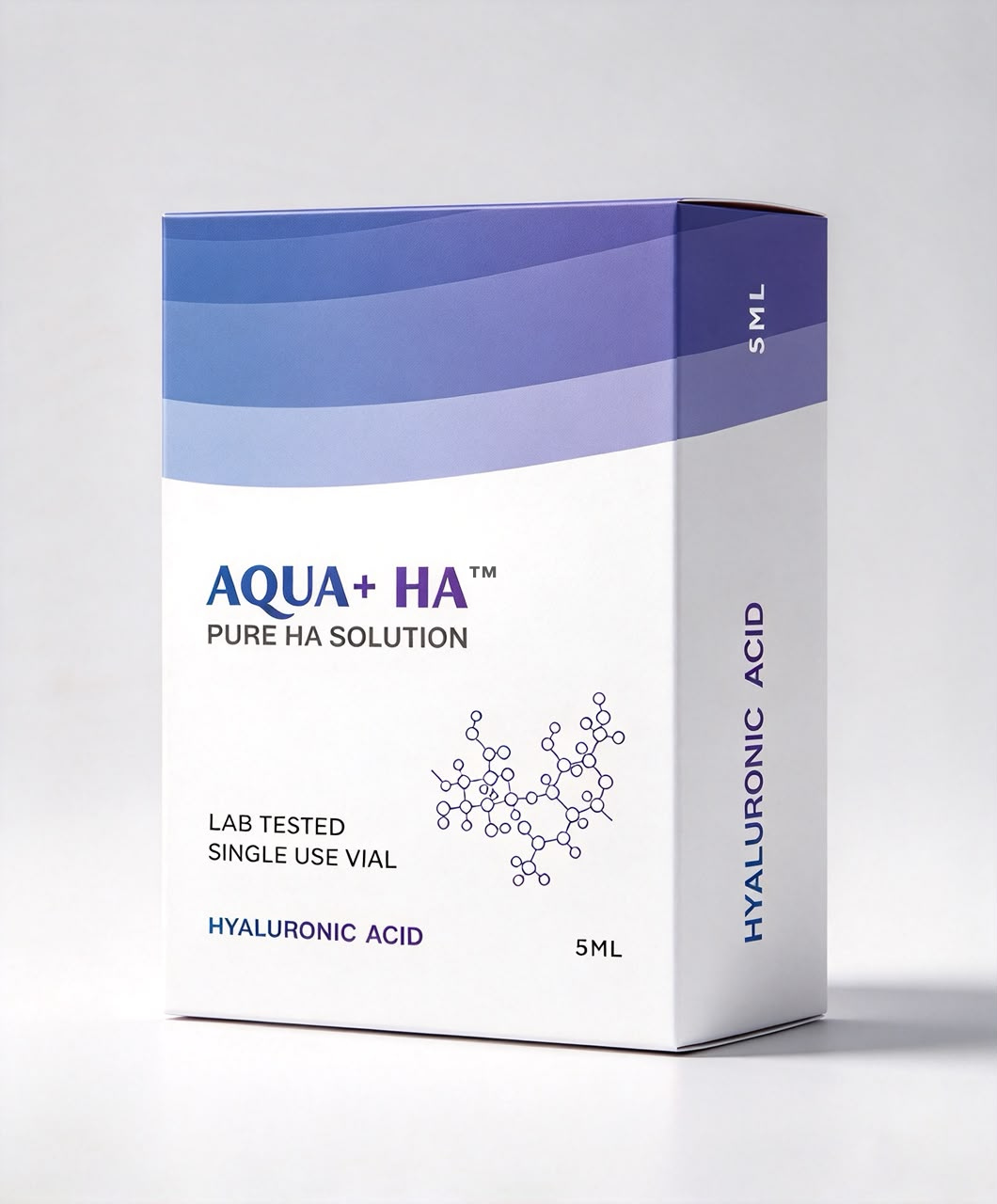
High-Viscosity Surface Hydrating Serum & Glide Formula. Formulated for Smooth Application, Continuous Moisture, and Skin Comfort
Why 1.5 MDa Molecular Weight Matters
Many hyaluronic acid serums in cosmetic routines use fragmented or lower-molecular-weight hyaluronic acid, which absorbs rapidly on the surface and can leave skin feeling dry or tight as moisture evaporates.
Aqua+HA™ is formulated with a 1.5 MDa (MegaDalton) high-molecular-weight sodium hyaluronate in a simple, minimalist base. On the surface of the skin, high-molecular-weight hyaluronic acid forms a smooth, cushiony hydration layer that helps bind surface moisture, reduce friction during topical application, and leave the skin looking supple and calm.
Key Formulation Highlights
High-Viscosity Glide: Engineered with a smooth, non-tacky texture that provides even slip across the skin without dragging.
1.5 MDa Hyaluronic Acid Matrix: Supports surface hydration and helps maintain a soft, comfortable skin feel.
Balanced pH & Osmolarity: Formulated around pH 6.83 and 347 mOsmol/L to align comfortably with the skin's surface environment.
Endotoxin & Purity Testing: Batch-tested to strict internal quality standards, including an endotoxin specification below 0.05 EU/mL.
Minimalist, Preservative-Free Formula: Made without fragrance, essential oils, silicones, drying alcohols, or added preservatives.
Full Ingredient List (INCI)
Aqua/Water, Sodium Hyaluronate (1.5 MDa), Sodium Chloride, Monobasic Sodium Phosphate
How to Use
Apply an even layer onto clean, dry or slightly damp skin as part of your routine. Smooth gently across the face or target areas, reapplying as needed for continued slip and surface hydration. For external use only.
Packaging Configuration
Single Pack: Contains 1 single-use glass vial (5ml). Each vial contains zero preservatives and is individually sealed in its own protective box to ensure un-compromised product integrity.
Official Distribution Notice: Aqua+HA™, (A Skinvance™ brand) is exclusively available through authorized professional aesthetic clinics and our official e-commerce platform. Fein Beauty is the only official online distribution channel for Aqua+HA™ outside of partner clinics' direct websites.
Are you a licensed aesthetic clinic? Visit skinvance.pro to learn more about wholesale distribution opportunities and receive your complimentary evaluation kit.
Pre-orders are expected to ship around Dec 8th.
Not every hydrating serum leaves the same finish. Chain length and molecular weight play a big role in how a formula spreads, how long surface moisture feels comfortable, and how clean the ingredient list can stay.
Hyaluronic acid is measured in Daltons (Da), representing its molecular mass. High-molecular-weight sodium hyaluronate (HMW-HA) sits around 1.5 MegaDaltons (1.5 MDa), whereas lower-molecular-weight hyaluronic acid consists of shorter polymer chains and fragments.
High Molecular Weight (1.5 MDa) vs. Shorter Chains
Surface cushion and slip: A 1.5 MDa high-molecular-weight network forms a smooth, cushiony hydration layer on top of the skin, supporting steady glide during application rather than sinking in immediately and leaving the surface feeling dry or tight.
Polymer behavior and chain length: Larger glycosaminoglycan chains entangle and retain surface water differently than shorter chains, helping maintain a soft, comfortable skin feel.
Surface comfort and appearance: Keeping the formula focused on smooth topical glide and surface moisture helps the skin look supple and balanced.
Molecular Weight and Chain Behavior in Literature
Published research examines how hyaluronic acid molecules of different sizes behave in biological and topical systems. For example, a study in ACS Biomaterials Science & Engineering (PMC4533115) discusses how lower-molecular-weight hyaluronic acid fragments interact differently with cell surface receptors such as Toll-Like Receptors 2 and 4 (TLR2/TLR4) and downstream signaling molecules compared with larger polymer chains.
A review in Wounds / PMC3356526 further compares how fragmented hyaluronic acid and higher-molecular-weight forms behave in tissue environments. In a purely cosmetic formulation context, keeping a high-molecular-weight 1.5 MDa structure intact supports surface film formation and smooth spreadability rather than relying on fragmented chains.
Surface Comfort and Even-Looking Tone
In skincare research, uneven skin tone and post-irritation discoloration are widely studied in relation to surface stress and pigment transfer pathways. Clinical overviews on post-inflammatory hyperpigmentation from NCBI StatPearls and acquired melanosis from DermNet describe how signaling factors such as Interleukin-1α (IL-1α) and Endothelin-1 (ET-1) relate to pigmentary changes in skin.
Pairing a clean, low-irritant base with a 1.5 MDa high-molecular-weight formula like Aqua+HA™ focuses on gentle surface hydration, minimal friction during application, and a smooth, balanced-looking complexion.
